Originally Published April 4, 2026
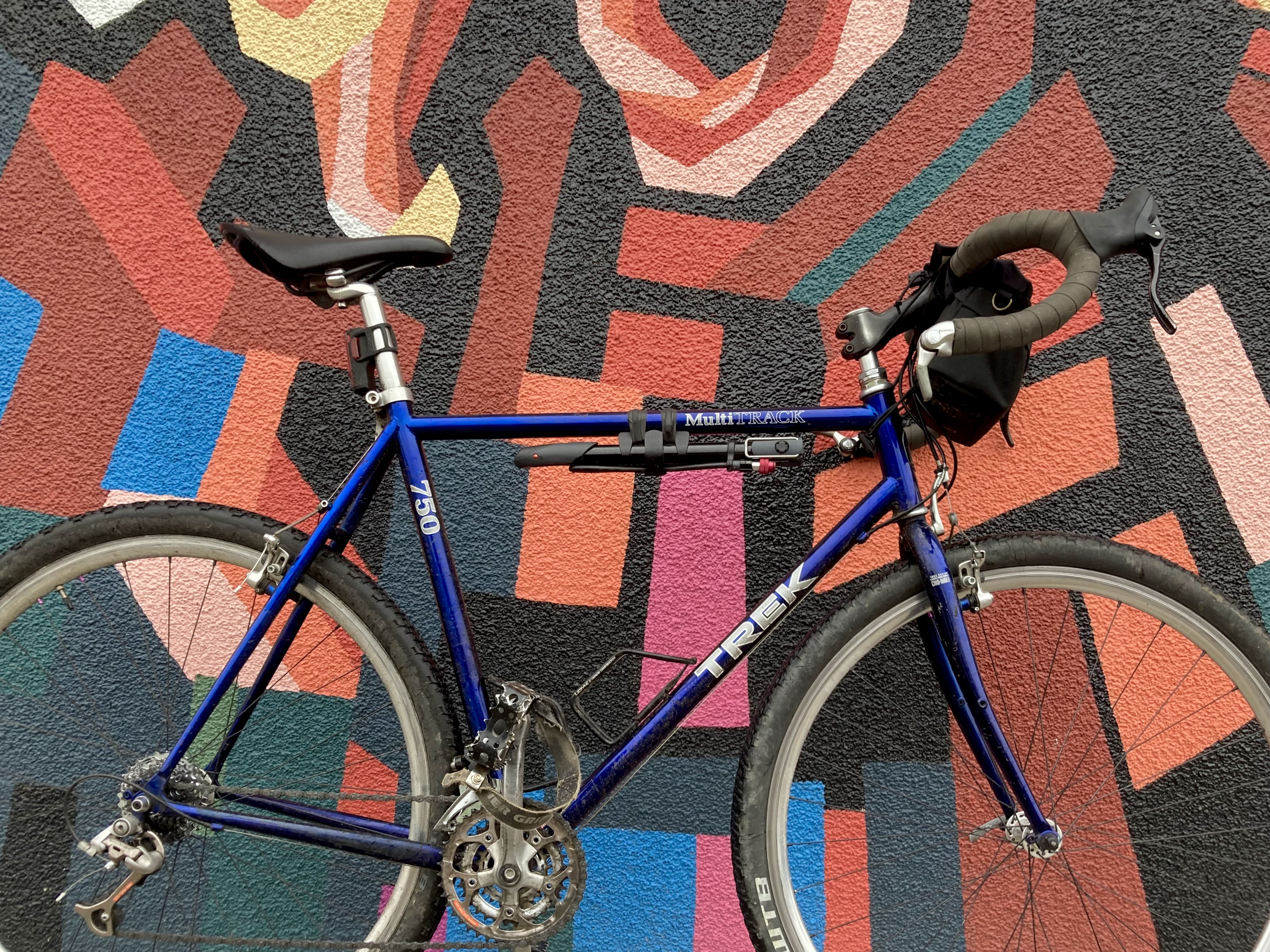
My 1997 Trek Multitrack drop bar conversion
Yes, I have too many bikes. More than I need. But if I had to have just one bike, it would be this--my 1997 Trek 750 Multitrack. Becuase it does exactly what Trek designed it to do--go almost anywhere and do almost anything.
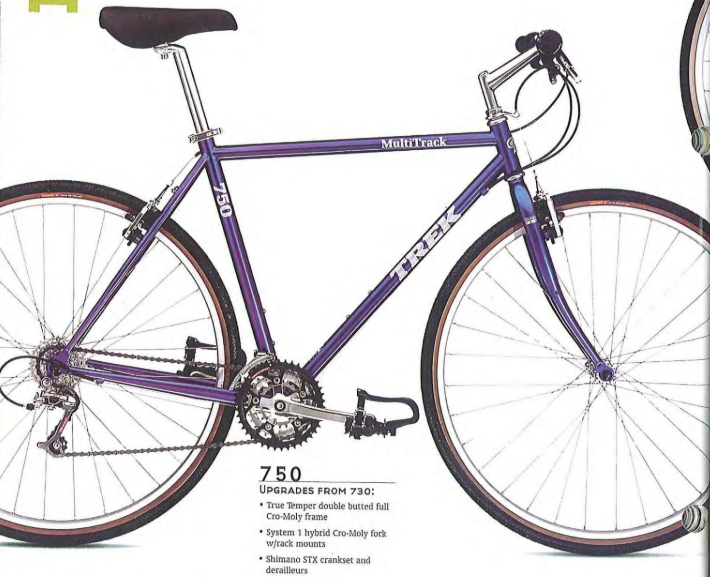
The 750 as it appeared in the 1997 Trek catalog
Originally designed as a flat bar "hybrid" bike, the Multitrack was originally intended as a compromise between a road bike and a mountain bike, offering an upright riding style that prioritized comfort. Over time, this product niche came to incorporate more and more compromises as manufacturers realized that afforability was more important than performance in a hybrid bike. Nowadays, most are aluminum with twist shifters, suspension seatposts, and wide padded seats.
But in 1997, the 750 Multitrack was made with double butted CroMo steel, 700c wheels, and a sturdy unicrown fork. Today, such a bike would probably be marketed as a gravel bike. In fact, it has the same geometry as the venerable Surly Crosscheck. And, like the Crosscheck, its potential is almost limitless.
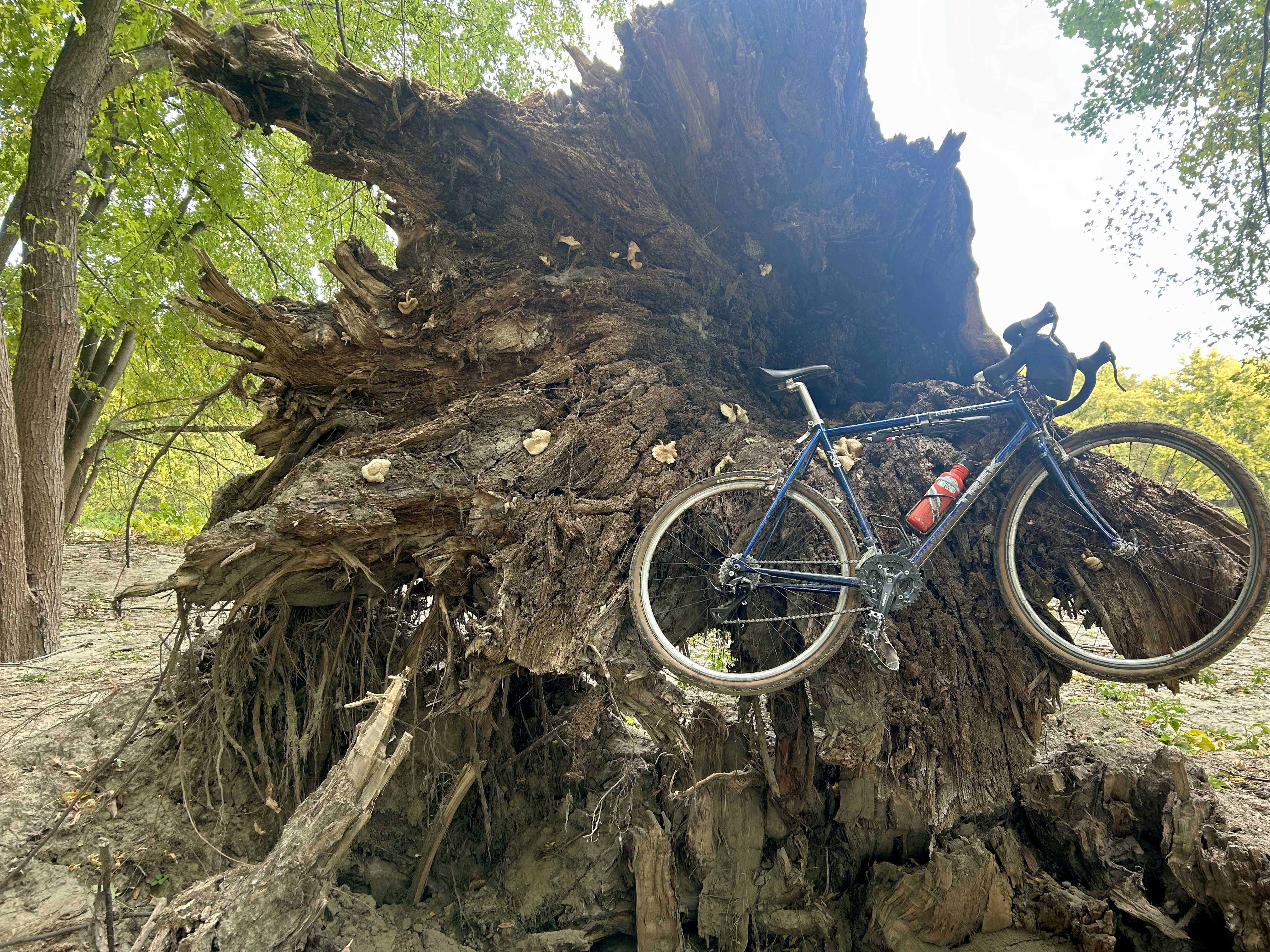
On an adventure in the Minnesota River Bottoms
I bought my Multitrack in 2020 for one simple reason: I wanted to explore the Minnesota River Bottoms. I'd previously ridden my Kabuki Diamond Touring on the trails along the river, but I knew it wasn't robust enough to fully navigate the mud, sand, rivulets, and silt of the ever-changing river bottoms trails.
A lot of folks ride the bottoms with mountain bikes or fat bikes, but the closest entrance in Mendota is over nine miles from my house and I wanted that ride to be quick and enjoyable, too. It's no fun riding knobby tires on pavement and I didn't want to just drive there and unload a bike from my car. I needed a proper gravel bike.
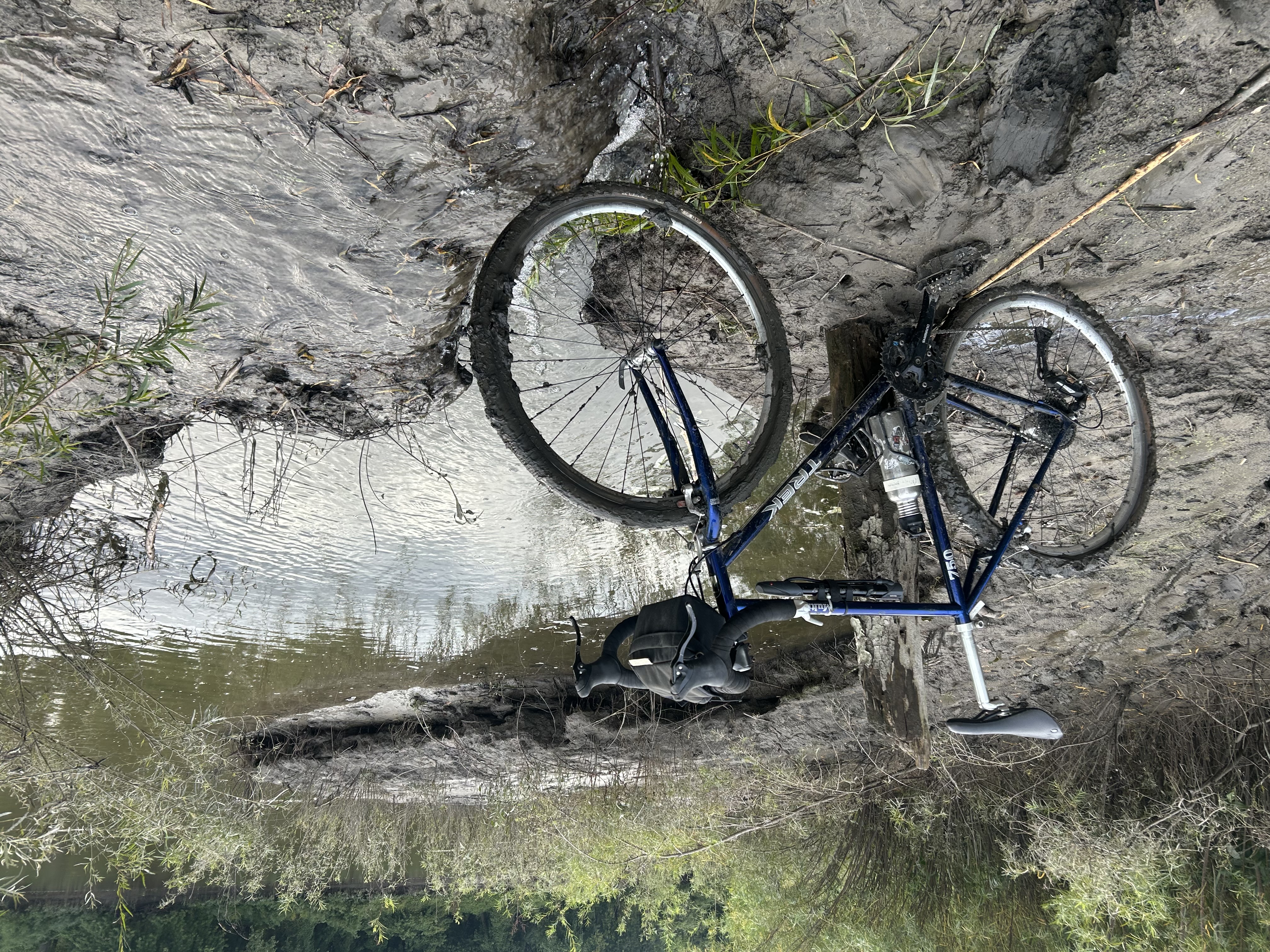
Multitrack in river mud
The problem was (and is) that gravel bikes are trendy and pricey. A decent new steel bike costs at least a couple grand. So I bought a used Multitrack for $150 and got to work.
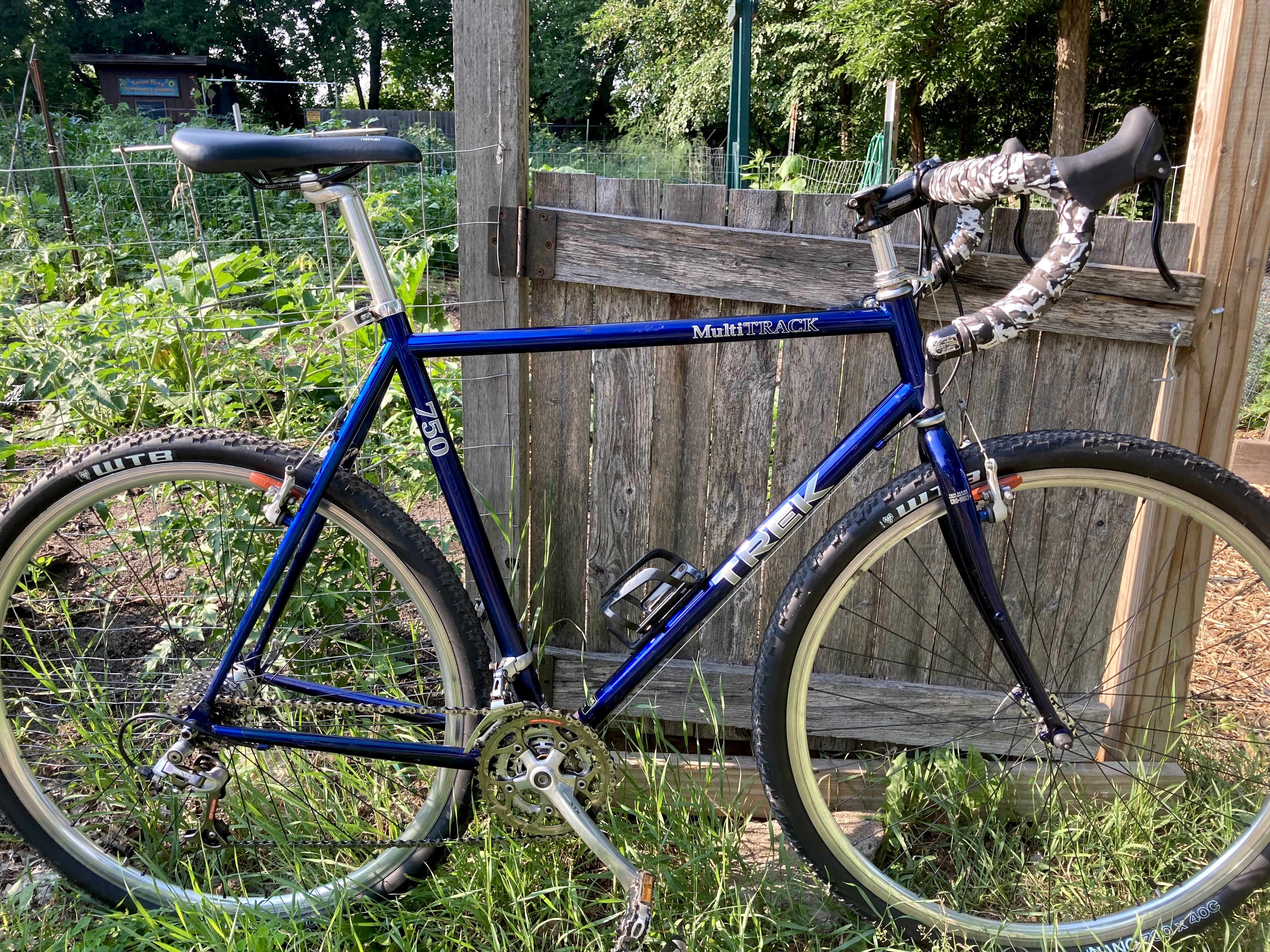
First iteration build
My first build kept the orignal Shimano STX drivetrain and just swapped out the stem and bars with some Shimano barcons in friction mode. I also upgraded the wheels with a pair of Kinlin rims that I'd bought from a local wheelbuilder. The rear was originally laced to a fixed gear hub so I rebuilt it with a Formula cassette hub.
I soon discovered that the Shimano barcons had the wrong pull ratio for the STX front derailleur, which is technically a MTB component. No matter what I did, I couldn't get it to shift into the granny gear. I could havec swapped it out for a different triple derailleur, but the Multitrack's chainrings are too small for most road triples. In the end, I bought a Rivendell "Stubby" Skeleton Key mech and it works great.
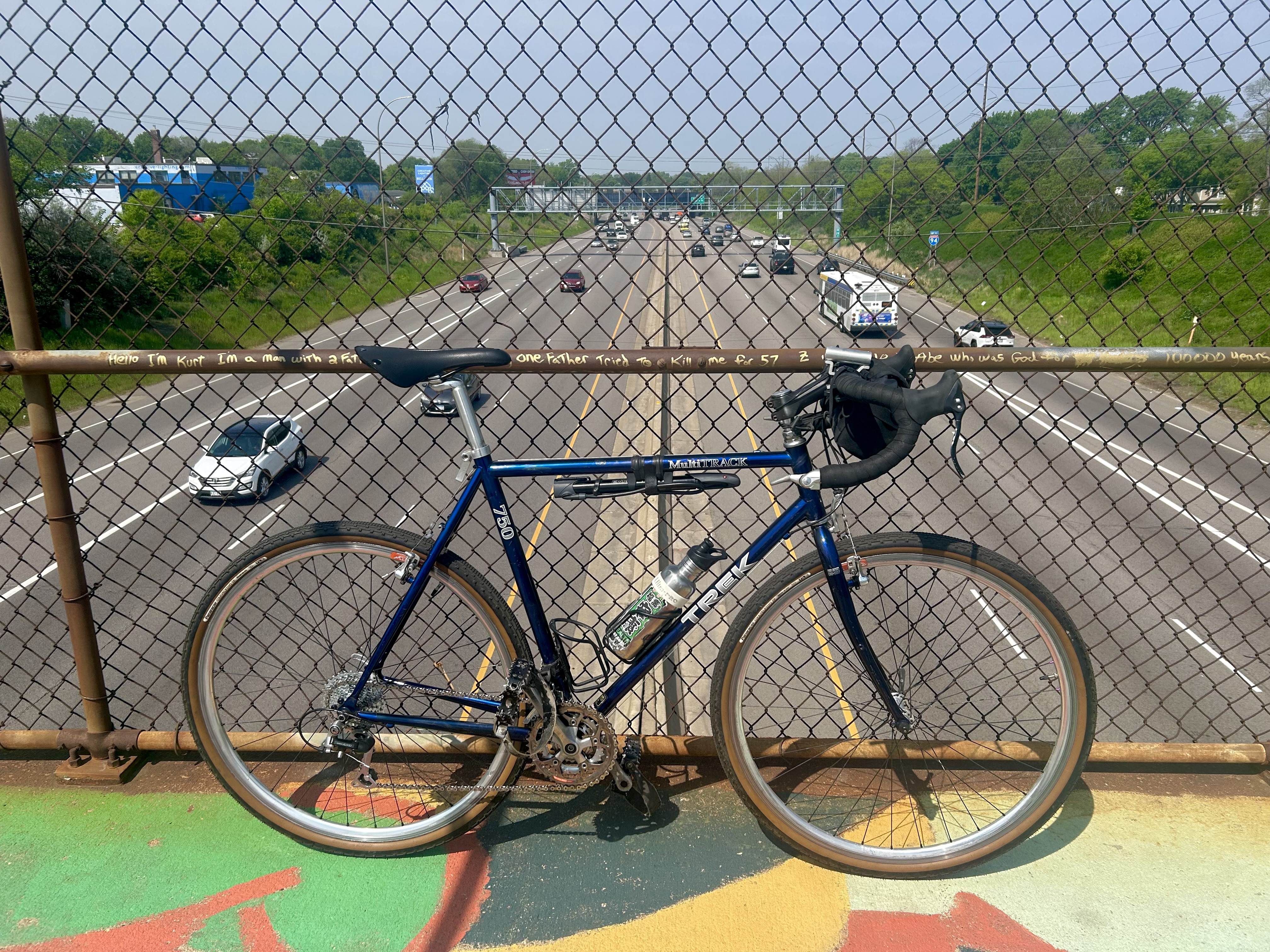
Second iteration build
The thing I really like about the Multitrack is its tire clearance. 40mm Gravel Kings fit perfectly and offer a quick supple ride on pavement with plently of traction in dirt. Plus, they're smoothe and comfortable.
After about 2,500 miles, the chainring teeth started skipping from wear. Usually, I'd just swap in new rings, but the granny ring on the STX crank is bolted directly to the middle chainring instead of the crank. Which means the middle ring is nearly impossible to replace. So I swapped in a new Shimano Acera crankset and haven't had a problem since.
While riding the Saint Paul Greenway (did you know you can bike from the western edge of Saint Paul all the way downtown on a gravel trail completely separated from cars? Someday it'll be an official trail...) I had an unpleasant surprise. The bolt on my seatpost suddenly snapped and HELLO! my saddle fell off. I biked home standing up, then installed a new bolt.
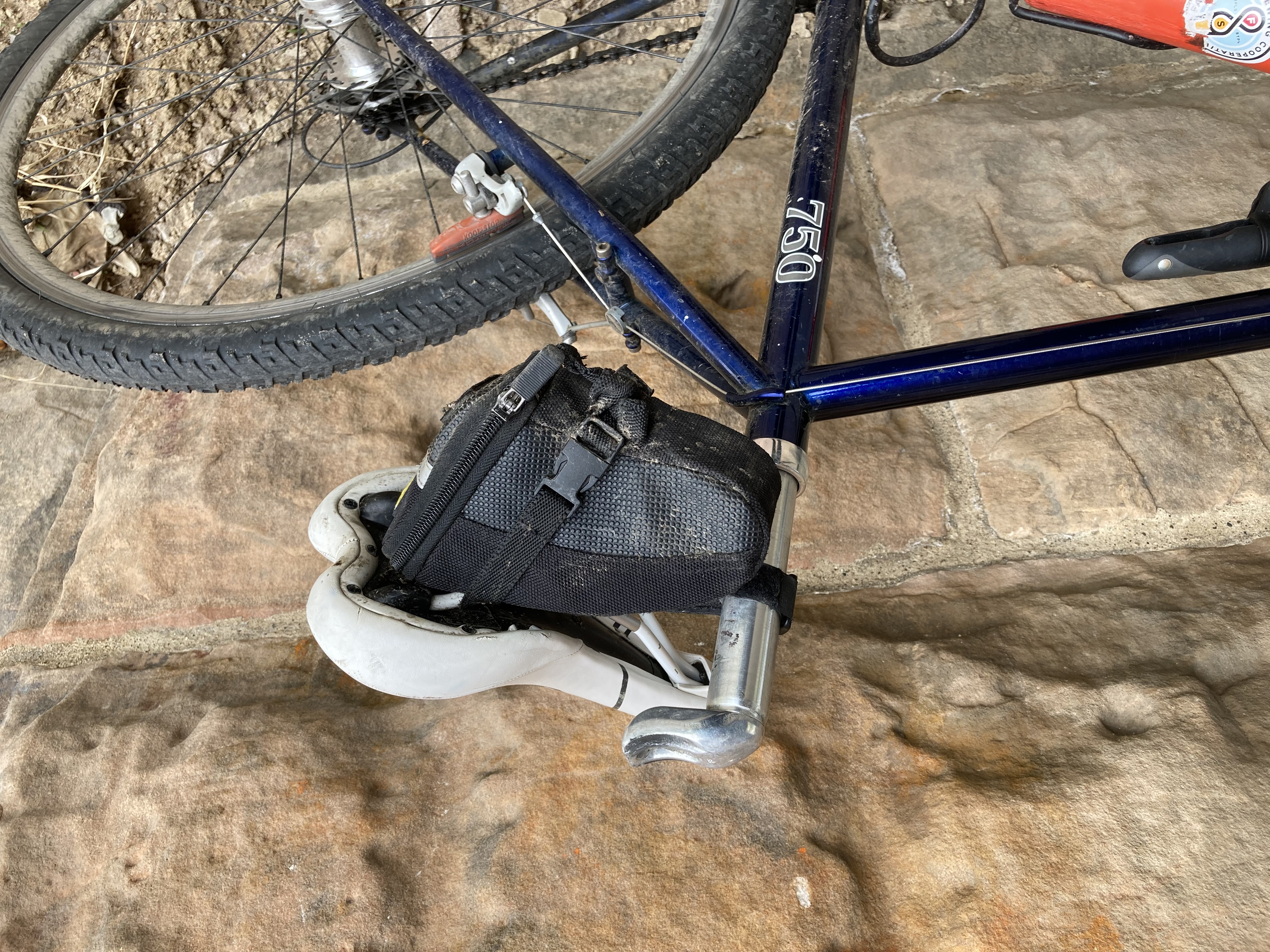
Beware a broken seapost clamp bolt
I eventually replaced the canti brakes with a pair of Tektro Oryx and installed a new Shimano rear derailleur. At this point, there's not much left of the original components. But that's OK--this bike is for riding, not collecting.
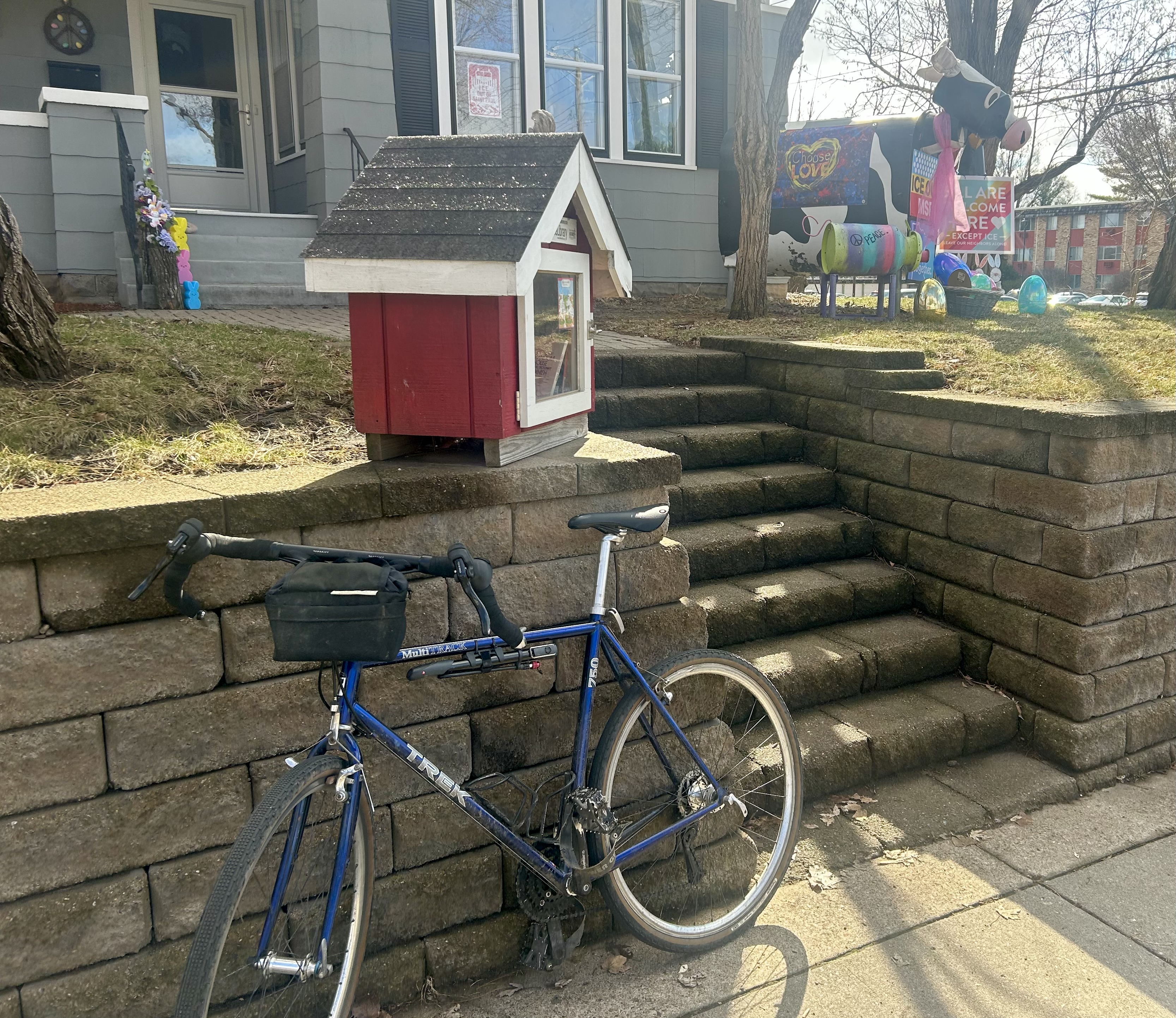
Current setup with Topshelf bars
This year, I've installed wide Redshift Topshelf Dropbars, which raises the bars up about two inches. Wide bars are pretty standard on gravel bike nowadays, but I'm still not sure what I think of them--they look like a Klingon Warbird landed on my bike. But damn, they sure are comfortable. I'm already getting used to the wider stance when riding.
In the past six years, I've ridden the river bottoms trails dozens of times. And a bunch of trails that veered off unexpectedly into the woods that I never would have explored on a road bike. More and more, I find myself choosing the Multitrack for everyday adventures because it feels great anywhere. I can even hop curbs without destroying my rear wheel. In particular, I choose it more and more for night rides, when it's a little harder to see potholes or sand piles. Wider tires don't eliminate surprises, but they do manke them easier to handle.
I also enjoy knowing that I took an old bike and adapted it to meet my needs. Not every old hybrid can be made into a gravel bike or monster cross or x-bike or whatever you want to call it. But a 90s Multitrack sure can! It can do almost anything.

Night ride to the Rock Island Swing Bridge