1983 Miyata Six Ten Touring Bike
August 18, 2026
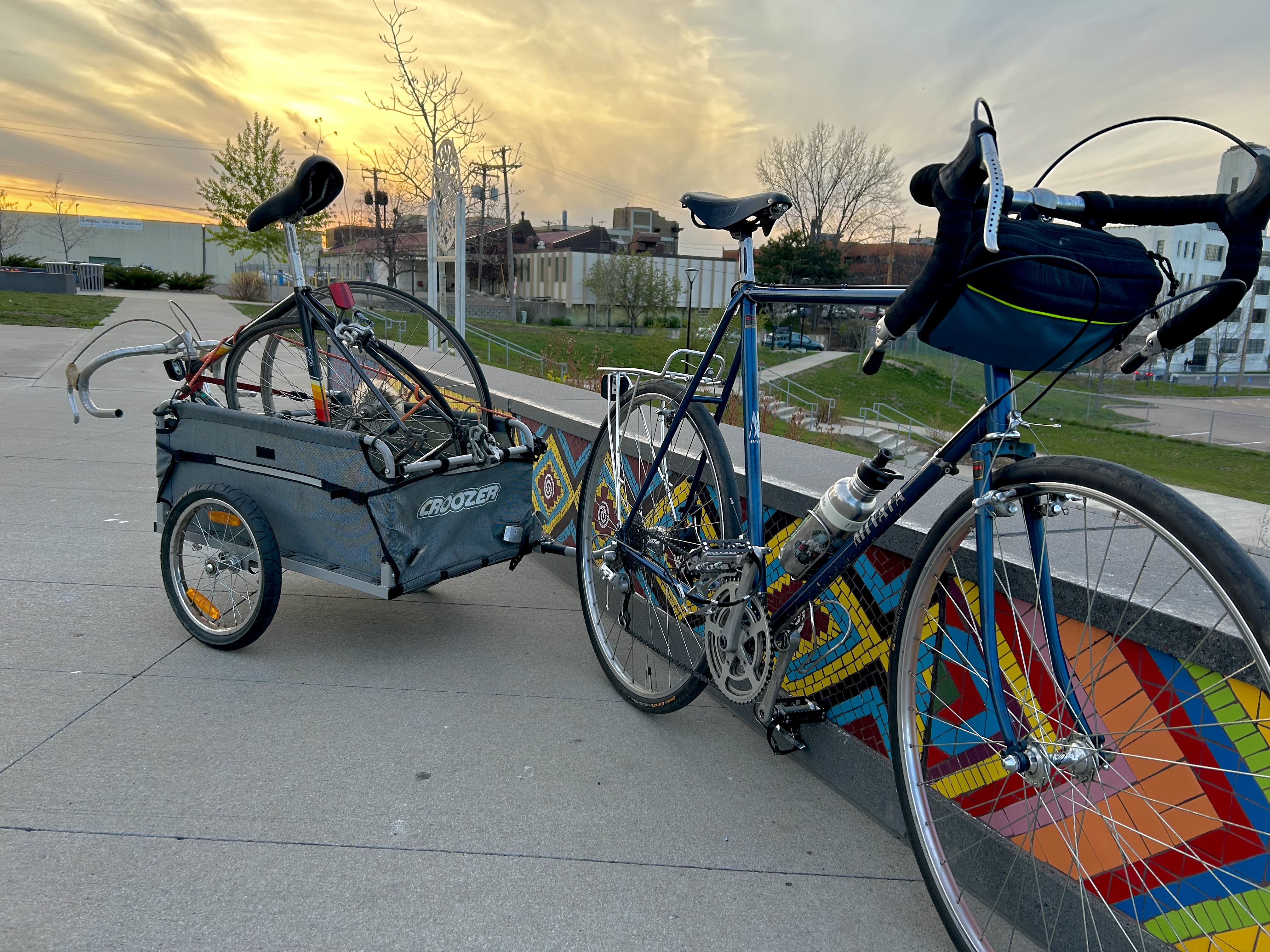
My Miyata Six Ten in cargo bike mode
The late 1970s and early 80s were the heyday of bicycle touring. This was a brief era after the inital bike boom of the early 70s but before the popularity of mountain bikes in the mid 80s. This was a time when the idea of biking across the country fully loaded with full camping kit became almost mainstream, popularized in part by events like the Bikecentennial in 1976.
As a kid growing up in suburban Minnesota, I was fascinated with the idea of bike touring and dreamed of someday biking from my home in Maple Grove all the way to Canada. It's a dream I still carry, even though life has always gotten in the way. But someday, this smoothe riding Miyata is going to take me there.
At the beginning of the 70s, road racing and touring bikes were only slightly differentiated. But by the mid 70s, many companies bagan making dedicated tourers while their road racing models became less and less practical for anything other than racing. By the early 80s, the best touring bikes from Trek, Specialized, and Miyata had several features in common:
- A longer wheelbase for a more stable and comfortable ride
- Wider rims and fork clearance to accomodate wider tires
- Mounting points for racks and fenders
- 27" wheels
- Cantilever brakes for better stopping power under load
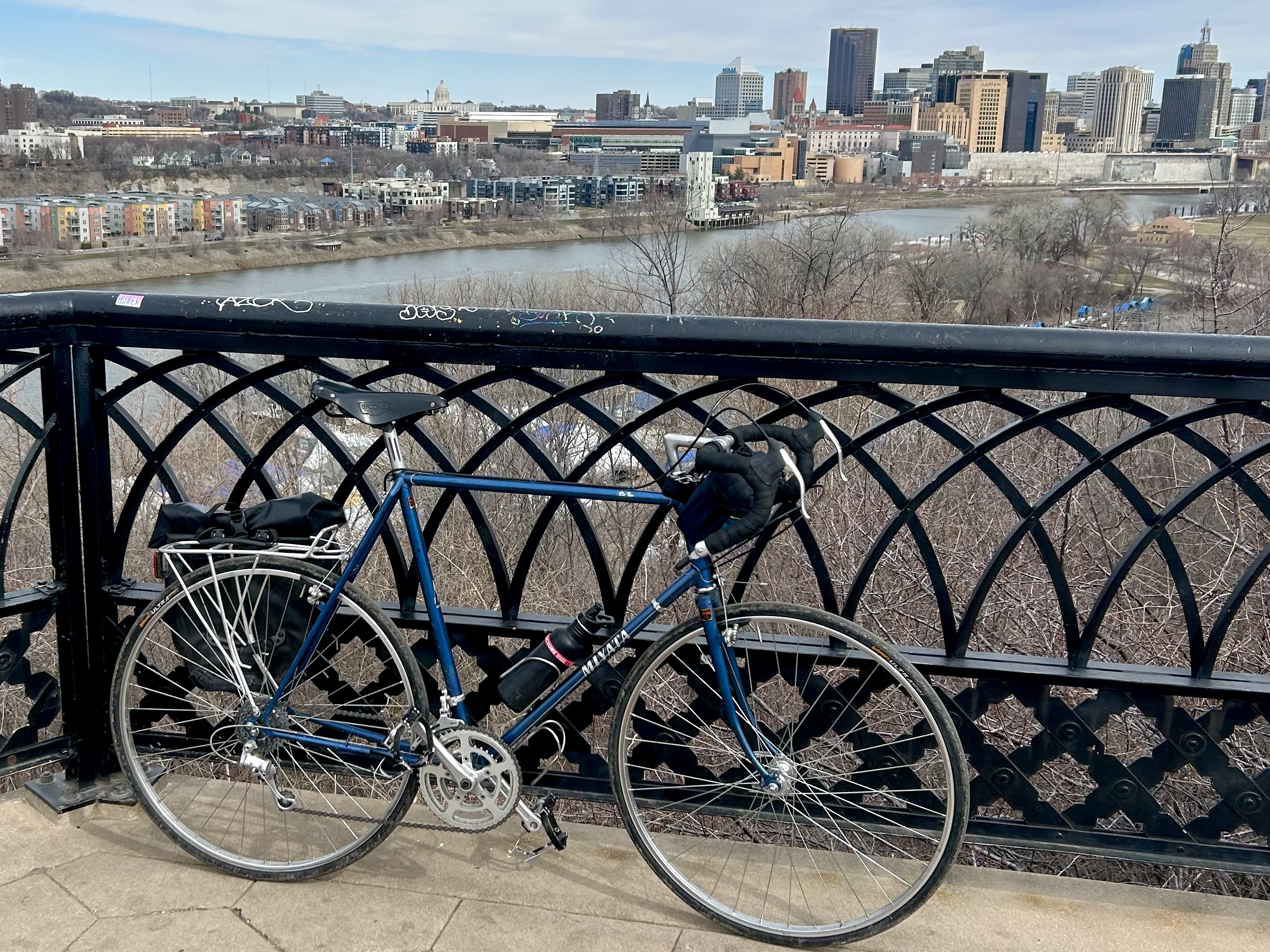
Drive Side View of the Six Ten
If you're thinking this list also roughly describes modern gravel bikes, you're not wrong. Indeed, any tourer from this era handles gravel just fine. But there are a couple of details that keep this era of tourer grounded in the vintage era.
The first is the 27" wheels, which are about 1/2" wider in diameter than 700c wheels. The reason tourers used 27" instead of 700c is that 27" tires were more common globally. So, if your sidewall blew out in Wyoming, Chile, or northern India, you could almost always find a replacement tire nearby. Today, the opposite is true and it's far easier to find 700c tires, which are often available in a handy folding version so you can pack an extra. Thankfully, Schwalbe, Panaracer, and Continental still make quality 27" tires. Right now, I'm running extremely capable Gatorskin Hardshells.
With a lot of vintage bikes, it's fairly easy to swap wheelsets to 700c and never worry about this issue again. But the Miyata is trickier because it was built for Dia-Compe 960s cantilever brakes and its mounting posts are very high and close to the rims. Cantis were not a new concept then, but every manufacturer seemed to have its own standards. As a result, it's nearly impossible to swap out the Six Ten's wheels to 700c--the brakes just won't reach rims.
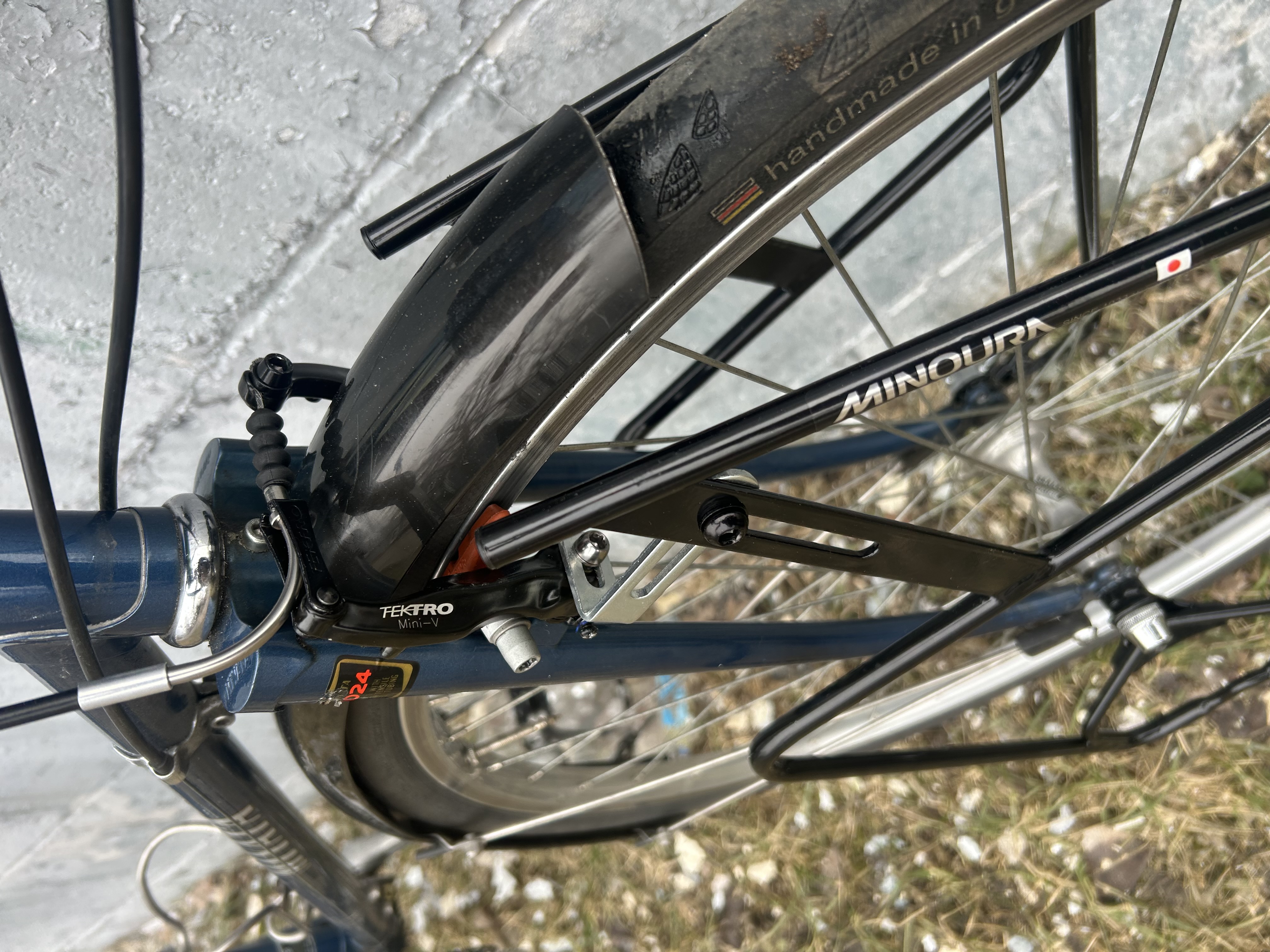
Tektro Mini-V Brakes
In my opinion, those Dia-Compe cantis are a monstrous pain in the ass. No matter how much I fiddled with them, they would never muster the braking power they promised. I tried a couple of other canti models with mized results until finally I fitted some Tektro mini-V brakes. I had to modify the front Tektros slightly so they'd fit the tight clearance between post and rim, but they're the best brakes I've found.
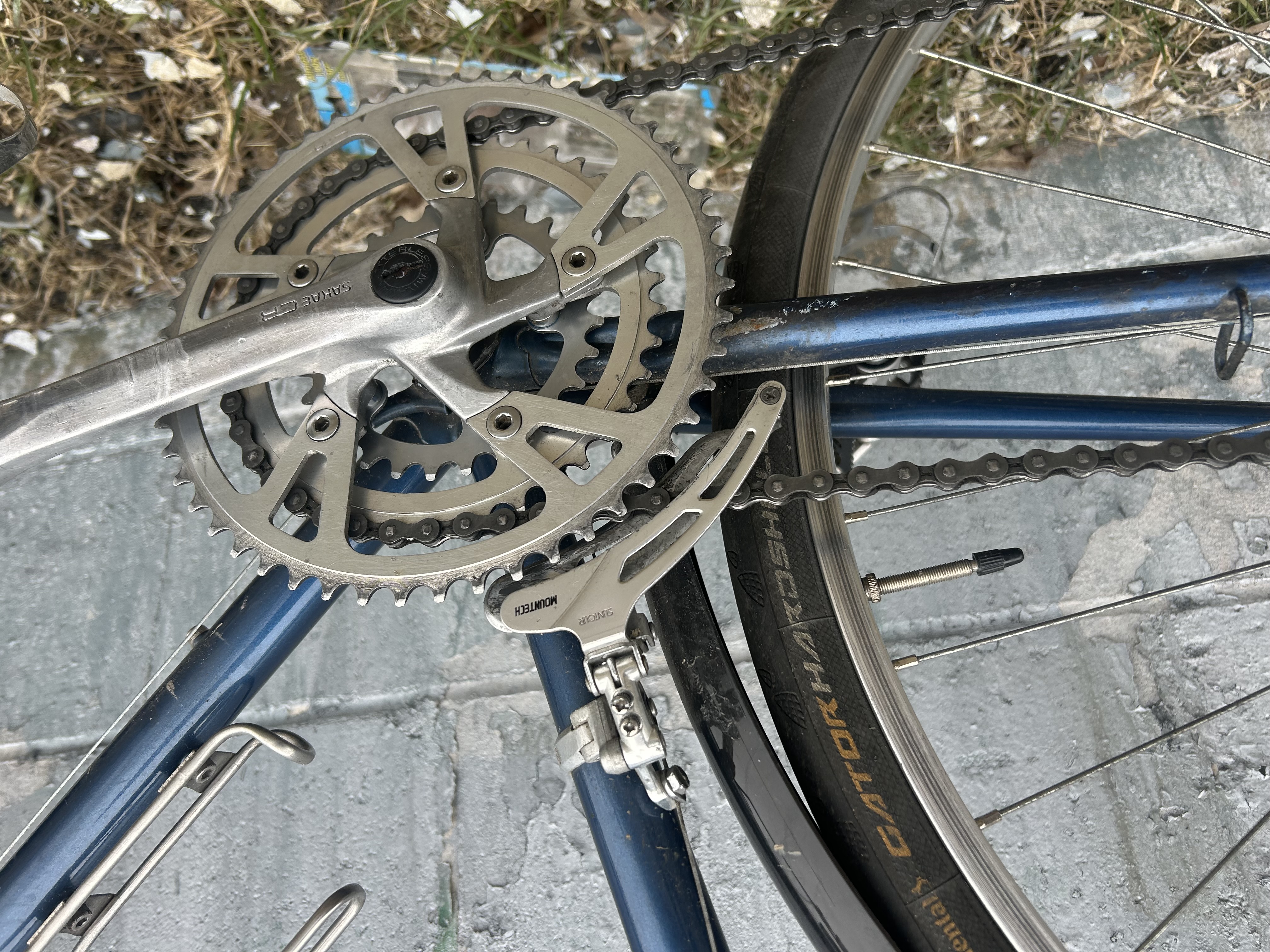
Sakae CR Turbine Crankset
I also swapped out the original triple crankset, which was geared to a half step between the large and middle chainrings. What does that mean? Basically, it means by changing both front an rear gears at the same time, a rider can cruise through all the gear combinations in order, with an equal progression through 12 speeds. To me, this is way too much thinking and not at all how I ride--I prefer to mash gears until it feels right. I also prefer a greater change between my big and medium chainrings. So, I changed to a Sakae CR "Turbine" triple crankset, which is both practical and beautiful.
Finally, I had to replace the rear Suntour Mountech derailluer. I love Suntour mechs, but the Mountech's design was radical. In a bad way--the guide pulley seizes up as soon as it gets dirty. I switched it with a slightly newer Suntour mech with a more traditional design.
The front Mountech derailleur, however, is one of the best triples I've every used. It has no problem switching into and out of the granny gear.
As an aside, you may notice that I switched handlebar bags. The teal Pearl Izumi bag fell apart after about a year. I replaced it with a Jandd bag which not only exudes excellent 80s vibes but will also likely last forever.
Day to day, I ride the Six Ten when I need to haul groceries or pull a trailer. With full fenders, it's also my rain bike. Every time I ride it, I'm reminded that Miyata never made a bad bike. Every detail is extremely well crafted and it rides like a dream whether loaded or not. Someday, I'm gonna ride this thing to Canada.